Build your own systems. That's where taste comes from.
My Jakarta FMCG business runs on systems I've built through agentic engineering, pushing frontier development as a solo engineer. Today I open-sourced one of them, the point-of-sale that runs our outlets, as proof of what you can build in less than 30 days.
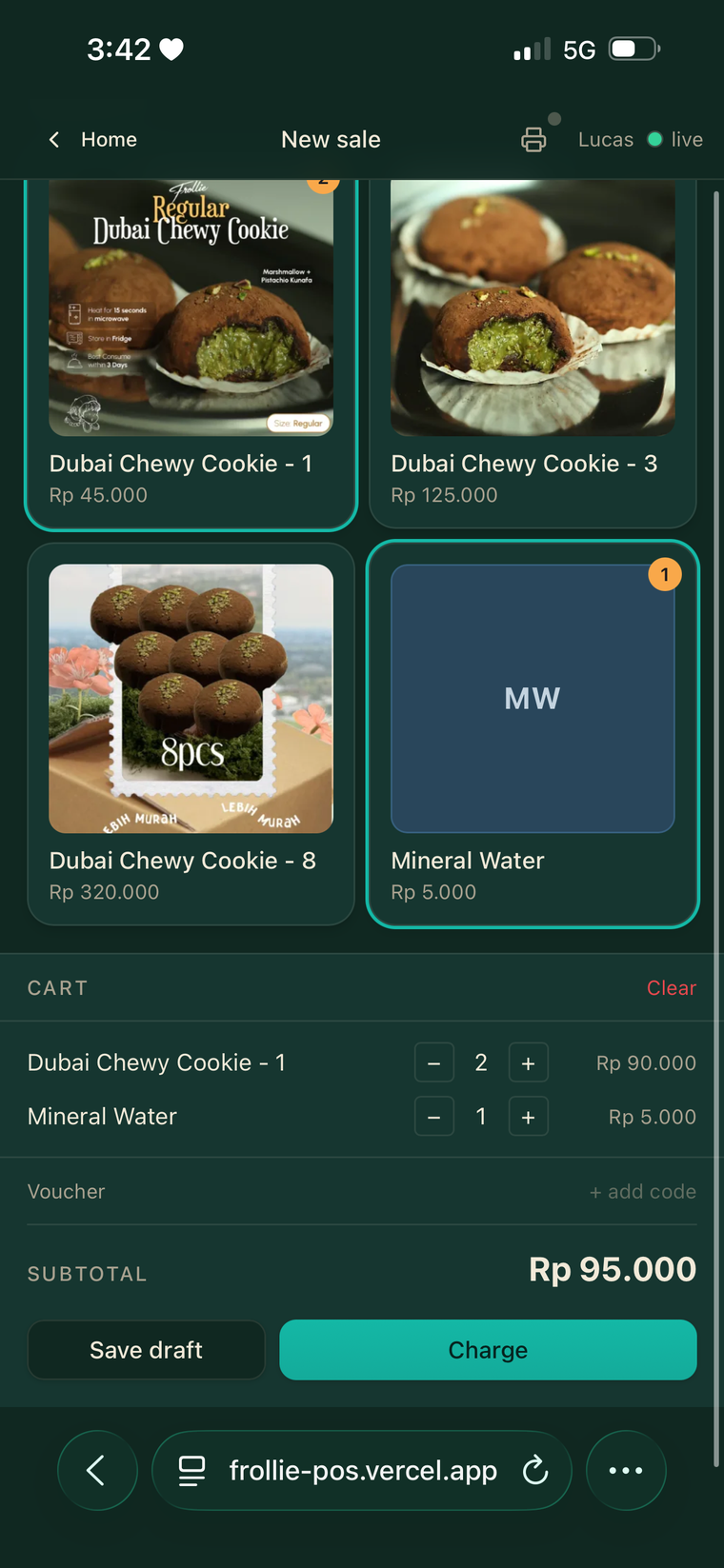
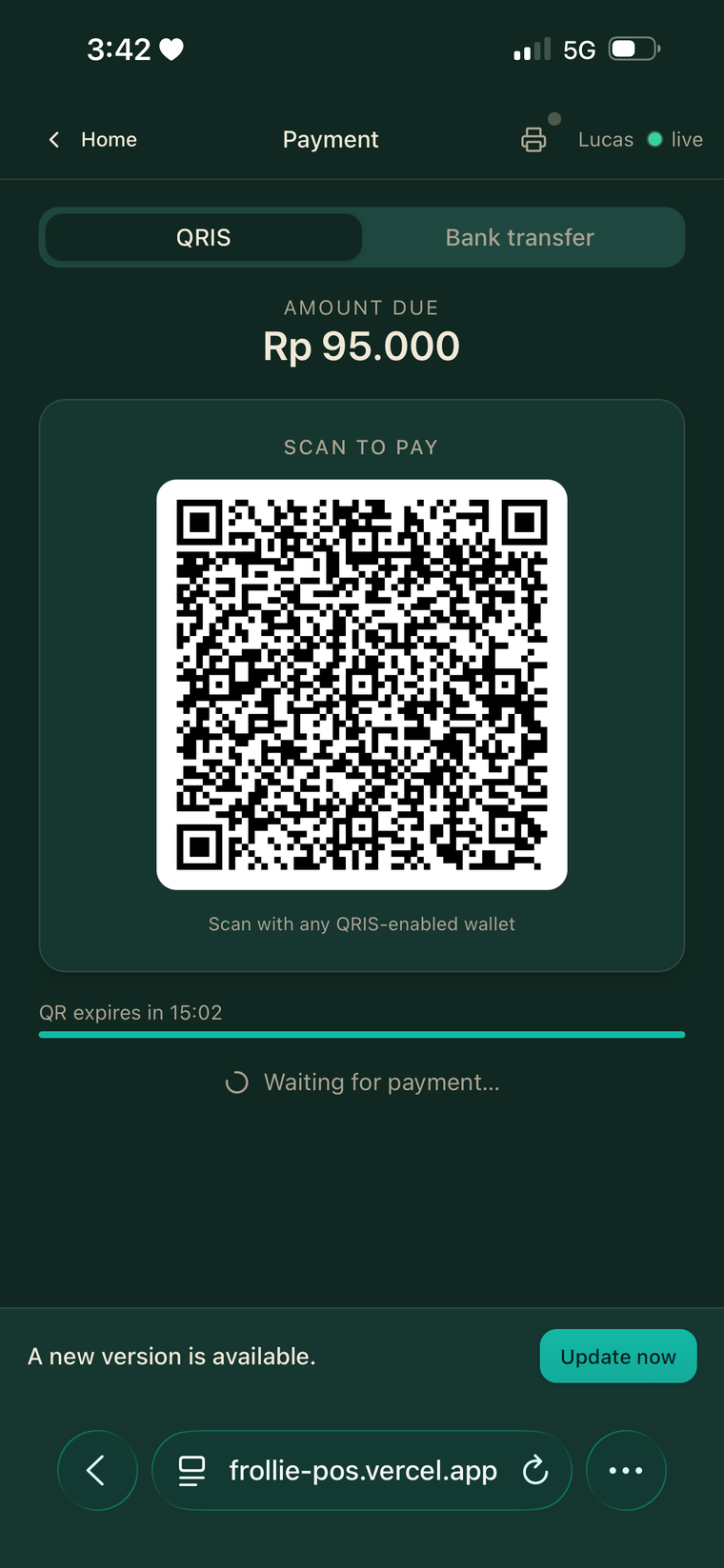
At 3:42PM on a Tuesday, someone at our Block M counter buys two Dubai chewy cookies and a bottle of water. The staffer taps two pictures on a phone, the customer scans a QRIS code, Rp 95,000 clears, a thermal printer spits out a receipt. No point-of-sale rental. No monthly POS SaaS line. The whole shop is a web app on an Android phone.
That is Frollie POS, and today it's open source (MIT, on GitHub). It's a small, concrete answer to the question every operator I talk to is really asking: what can one person and an agent build now that used to need a team and a budget?
What it is.
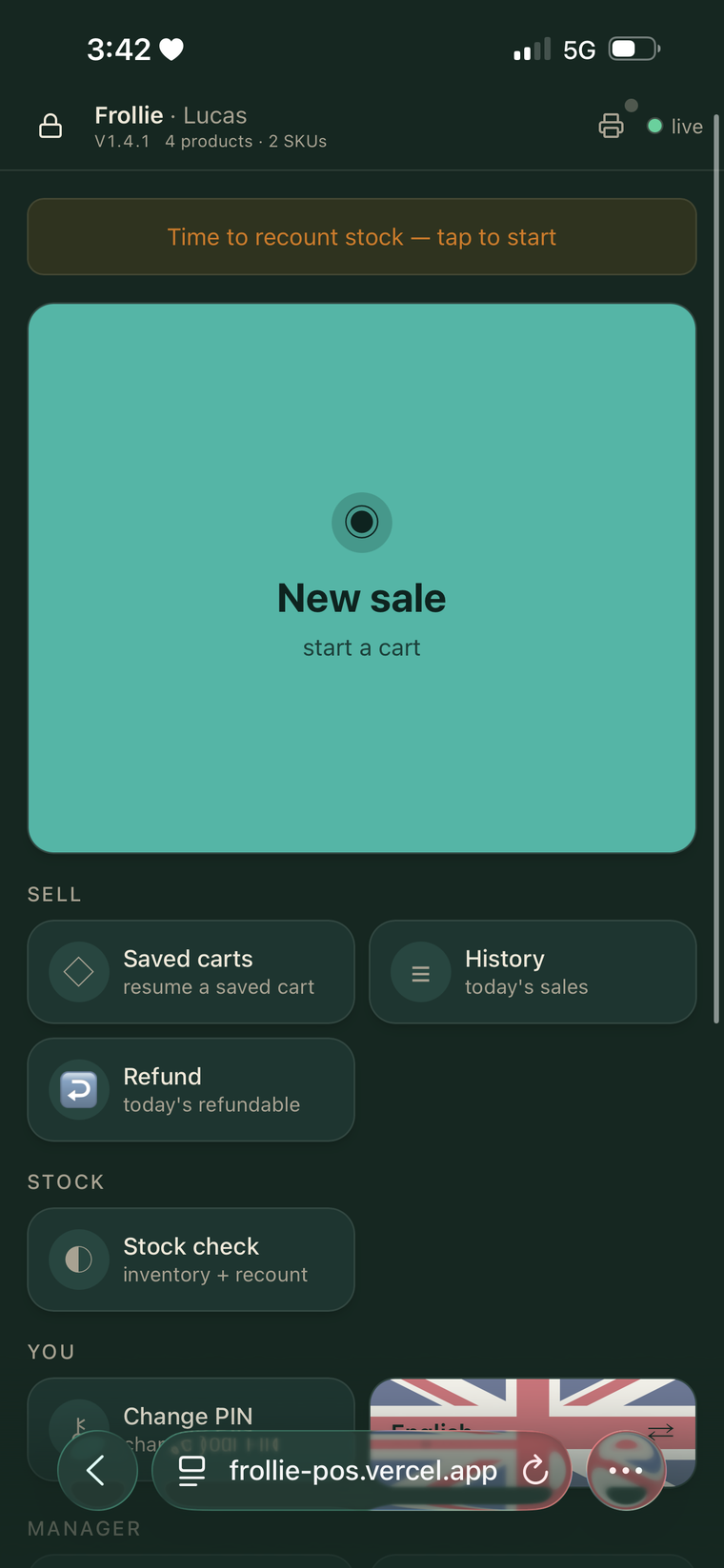
Frollie is our FMCG snacks business in Jakarta: three brands, six channels, one repo. Frollie POS is the till. It's an installable web app, so it lives on whatever Android phone is sitting at the counter. A staffer signs in with a four-digit PIN and gets the day-to-day surfaces: new sale, saved carts, history, refunds, a guided stock recount. A manager PIN unlocks the back office: today's totals, payment mix, top SKUs, per-staff numbers, settlement tracking, and an append-only audit log. Owners sit on a separate plane and approve the sensitive actions from their own phone, over Telegram, wherever they happen to be.
When a staffer gets locked out at the counter mid-shift, I can unlock them from my own phone, wherever I am, and shift handovers and access changes run on the same channel. Unglamorous, and completely load-bearing for a small business.
Why open-source a till.
Start with the money and you'll miss it. The subscription fees this replaces are small, a few hundred a month. The real return is that the system does exactly what the business needs and nothing it doesn't: no overhead, no features built for some other company, no line item for a SaaS vendor's marketing budget. You own it, and you can change it. So I put the code out: fork it, swap the currency and the payment rail, and it's yours.
This is the part I care about more than the app. Building these systems myself, instead of buying the nearest SaaS approximation, is where my own taste for system design comes from. You learn fast where a business actually needs the seams, and where it doesn't. You can't get that from a demo, or a deck, or a vendor call. You get it from building the thing and running it at a real counter, every day, since launch.
Force is almost free now. A first-draft deck, a benchmarking sweep, a working prototype: overnight outputs. What doesn't get cheaper is knowing which system to build, and what "good" actually looks like for the business in front of you. That judgement is taste, and taste is earned by shipping your own systems and living with the consequences.
Where this goes for a business like yours.
This is the work I do through Ikigai AI Ventures (venture builds) and with Nick Pinidiya at Qubit (agentic-readiness and value-creation advisory): sitting with an operator, finding the workflows worth handing to agents, and building the systems that let the existing team actually run them. Frollie POS is one artifact of it, and it's the honest kind, because I'm running it, not demoing it.